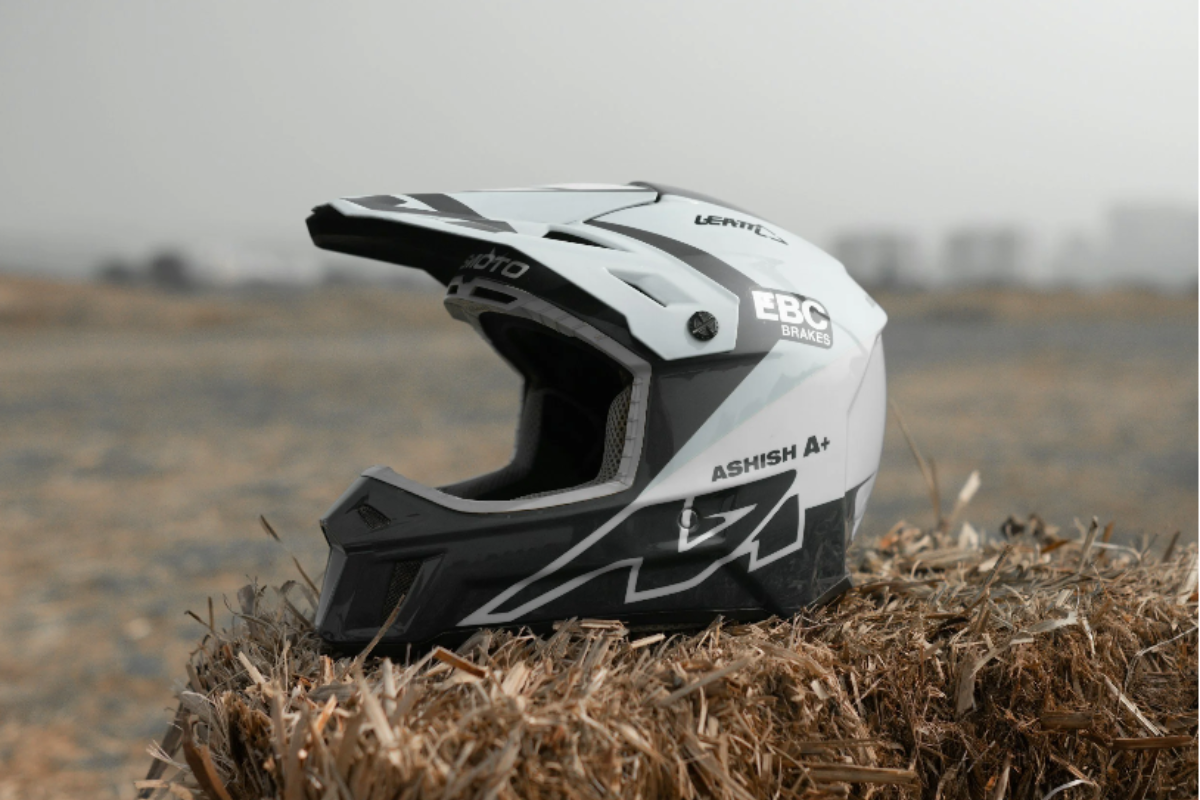
We often hear “wear a helmet,” but few people understand what actually happens during a crash. How does a helmet protect you? Is a more expensive helmet really safer? This article breaks down the life-saving science behind helmets in a way everyone can understand.
The Enemy: Traumatic Brain Injury (TBI)
In a motorcycle crash, your head is vulnerable to two types of injury:
- Direct Impact: When your head hits the ground, a vehicle, or another object.
- Sudden Deceleration: When your moving head comes to a sudden stop, causing your brain to slam against the inside of your skull.
It is this second type of injury—the internal collision—that often causes the most severe and lasting damage. This is where a helmet does its most critical work.
The Three Parts of a Helmet & How They Work Together
A certified helmet isn’t just a hard shell. It’s a sophisticated system of integrated parts, each with a specific job.
1. The Outer Shell
Material: Typically made from polycarbonate, fiberglass, or carbon fiber.
Job: Its primary job is to prevent penetration from sharp objects and to distribute the force of an impact over a larger area of the helmet. It acts like a sturdy shield.
2. The Impact-Absorbing Liner
Material: Expanded Polystyrene (EPS) foam—the same kind of foam used in coolers and packaging, but engineered for safety.
Job: This is the most important part. Upon impact, the EPS foam crushes in a controlled manner. This crushing action absorbs the kinetic energy from the impact and slows down the deceleration of your head. Instead of your skull and brain stopping instantly, they stop more slowly and gently. The foam is designed to crush once; this is why you must replace a helmet after any significant impact, even if the shell looks fine.
3. The Comfort Padding
Material: Soft, moisture-wicking foam and fabric.
Job: This layer makes the helmet comfortable to wear and helps with fit, but it also provides a small amount of additional cushioning.
The Physics in Action: A Slow-Motion Crash
Imagine a crash in slow motion:
- Impact: Your helmet hits the pavement.
- Energy Transfer: The hard outer shell spreads the force across its surface.
- Absorption: The EPS foam liner crushes, converting the kinetic energy of your moving head into its own destruction. This process takes precious milliseconds.
- Result: The helmet absorbs the energy and manages the deceleration, so your head and brain don't have to. The force that reaches your skull is dramatically reduced.
Why Certification is Non-Negotiable
This complex process is precisely why certification standards like TISI, ECE, and DOT exist. They are not just stickers.
- They Test the System: These standards rigorously test the entire helmet system—the shell's strength, the liner's crushing ability, the strap's retention strength—to ensure it performs this energy-absorption sequence correctly every time.
- An Uncertified Helmet is Useless: A cheap, uncertified “novelty” helmet might have a hard shell, but it often lacks proper EPS foam. In a crash, it will not crush and absorb energy. It can crack or transfer the full force of the impact directly to your skull, offering a false sense of security.
The Bottom Line: It’s About Managing Energy
A helmet doesn't make you invincible. Its job is to manage the energy of a crash to reduce the peak force that reaches your brain. It turns a potentially fatal or life-altering impact into a survivable one.
Wearing a certified helmet is the single most effective way to prevent a traumatic brain injury on the road.
Your brain is irreplaceable. Protect it with a helmet that’s designed to do its job.
Want to ensure others have this protection?
Sponsor a certified TISI helmet for a rider in need. 700 THB can save a life.